Economic Rationale for Tariff Reform There is more to the tariff reform case than just improving administrative efficiency. Manufacturing competitiveness nowadays requires uninterrupted global value chains, so any small inefficiency still has an impact on the whole economy. These are the repercussions of the input costs raised, shipments delayed, and export competitiveness weakened thus the …
Union Budget 2026: Economic Rationale for Tariff Reform
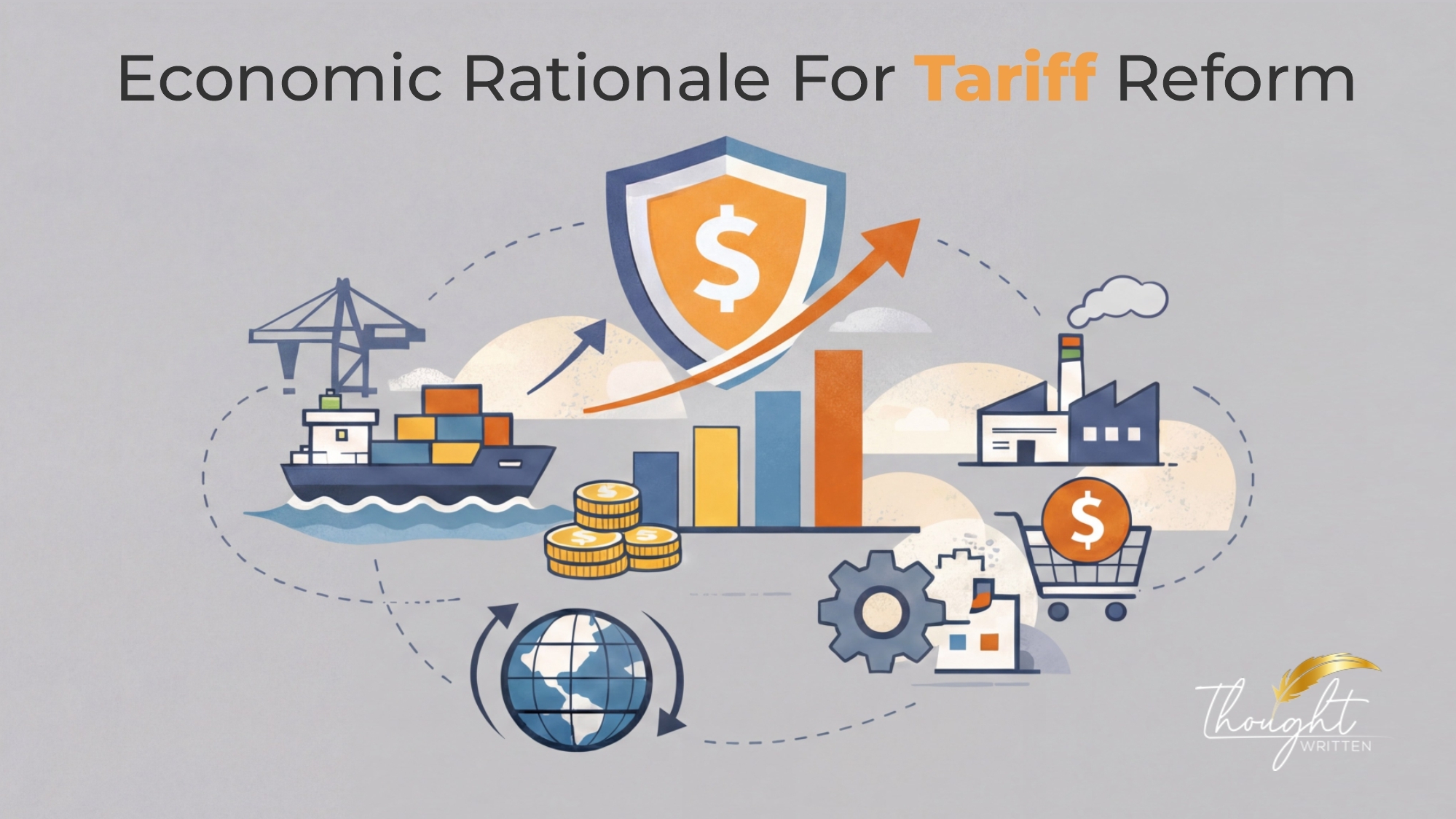
Economic Rationale for Tariff Reform
There is more to the tariff reform case than just improving administrative efficiency. Manufacturing competitiveness nowadays requires uninterrupted global value chains, so any small inefficiency still has an impact on the whole economy. These are the repercussions of the input costs raised, shipments delayed, and export competitiveness weakened thus the time when multinational companies are looking for alternatives of China for their manufacturing bases.
Finance Minister Nirmala Sitharaman committing to an overhaul of customs procedures in December has opened up a rare policy space, but little changes here and there will not suffice. The forthcoming budget is a window of opportunity for implementing wide, ranging reform rather than making small changes.
Private investment remains subdued despite continuous economic growth and low inflation, with the federal government capital spending share in GDP terms having doubled since 2014, while debt has exploded to 81 percent of GDP from the 60s when the present government took office. This is a major change in India’s economic setup, with the government having taken over the private sector’s role as the main investment driver.
This change in the role of the government has far, reaching consequences. When the government takes up all the available credit, interest rates stay at a level higher than they might have been, and investors see fewer reasons to put their money into the business. This leads to a vicious circle where government investment displaces.
Growth Projections and Investment Outlook
Despite these challenges, India’s economic outlook remains relatively positive. India’s economic value expanded by 8.2 % over year in the second quarter of fiscal 2025 to 2026, reinforced by robust private consumption and investment, aided by easing inflation and favorable rural conditions.
Multiple international institutions have provided growth forecasts for India:
Reserve bank of india : Projected 7.3 Percent real GDP growth for FY 2025 – 26.
Asian Development Bank: Revised forecast to 7.2 percent, up from 6.5 percent. United Nations: Projected India’s economy growth rate at 6.6 % in 2026, driven by resilient private consumption and strong public investment that are expected to largely offset adverse effects of higher U.S. tariffs on exports.
Deloitte : Optimistic scenario suggests growth between 7.5 – 7.8 % fiscal 2025 – 26.