There were times when politics felt simpler to understand, not in terms of strategy of course, but in terms of structure at least. The world was divided into a few dominant forces and hence the way strategies rolled out and alliances were made were also simple to understand. However, today if we go to see, …
Multipolar World Explained: How Global Power Is Changing
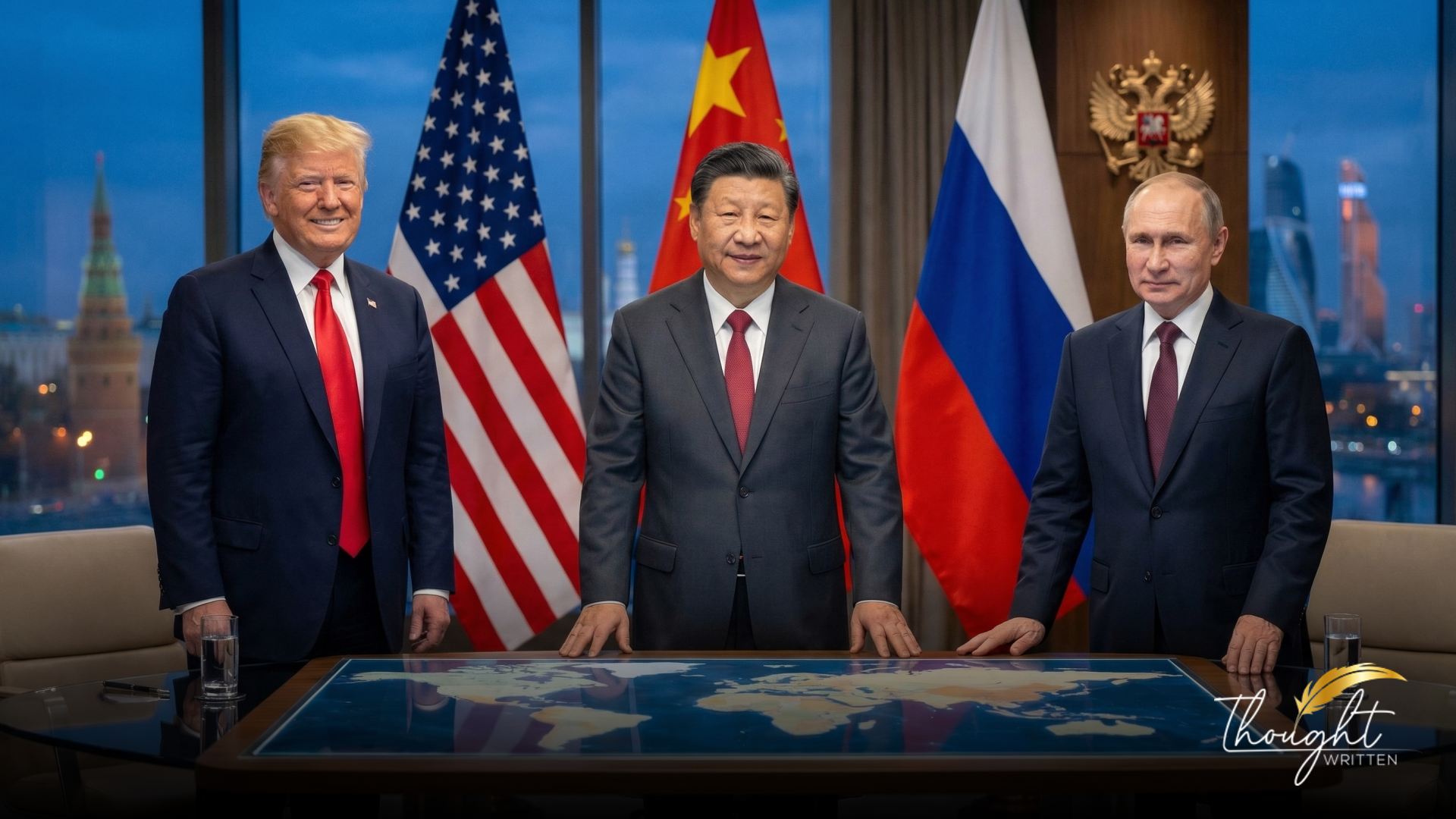
There were times when politics felt simpler to understand, not in terms of strategy of course, but in terms of structure at least. The world was divided into a few dominant forces and hence the way strategies rolled out and alliances were made were also simple to understand. However, today if we go to see, we’d find that power and alliances are not just resting with dominant countries and instead influence is spreading in such a way that each decision that is taken, shapes global results. This kind of international relation where teh power is distributed among several major countries, not just dominated by one or two countries, is known as multipolarity. These multiple nations’ decisions don’t just affect the military of each nation, but also influence the politics, economics, global supply chains, energy and natural resources and even security of all the nations on a global level.
Well, it all began with two superpowers: USA and USSR, where the world was divided into two blocs. The capitalist bloc was led by the USA and the communist bloc was led by the USSR. This period came to be known as the Cold War. Now, there were countries that aligned politically, militarily, and economically on one of the sides, one being NATO led by US and other being led by The Soviet Union . Global conflicts during this period involved nuclear war, space race and even ideological competition, wherein even smaller conflicts were influenced by which superpower supported which side.
However, the collapse of the Soviet Union ended this bipolarity and the world entered the ‘unipolarity Moment’. The US became the dominant global power at that time as it had the largest economy, strongest military, technological leadership, and even control over global financial institutions such as IMF, World Bank and WTO whose decisions were influenced by US-led order. Some major global events during thai period were the expansion of NATO, globalisation of trade, rapid spread of internet and digital economy, and the intervention of US in Iraq and Afghanistan. Yet, during this same period new powers were rising particularly in Asia.
While these powers were rising, the Global Financial Crisis of 2008 was seen as a turning point as it weakened the western economies and thus accelerated the rise of other powers. A few prominent developments included acceleration of India and China’s economic growth, with China becoming the second largest economy in the world. Even Russia reasserted its geopolitical influence and regional powers gained greater influence. The European Union strengthened its regulatory and economic role and all of this led to the gradual shift towards multipolarity. Many analysts today describe these happenings as the reason for ‘transitioning towards multipolarity’ that’s seen in today’s age.
We can now see certain major power centres today that act as global poles of influence. The US still holds albeit soft but unmatched power due to its largest military budget, unbeatable technological leadership and its dominance in global finance through US dollar. China is also seen as one of the powerplayers as it owns the world’s second largest economy, and is also a global hub for manufacturing as well as has set up massive infrastructure investment abroad. Not just that, it is heavily invested in 5G technology, AI, and renewable energy. The EU also operates as a collective economic power with its global regulatory influence and major trade power that it possesses. India has also joined this race with its fastest growing economy, strong IT and technology sector and its insistence on the strategic autonomy that stresses to maintain relationships with multiple global powers.
Additionally, Russia has also maintained its influence mainly through military power, nuclear arsenal,and by being involved in energy exports. Multipolarity is not limited to these 5 major powers. Several regions such as Brazil, Turkey, Indonesia and Gulf countries such as Saudi Arabia, UAE, and Qatar are especially gaining influence through energy resources and their strategic positioning as well as their leading economy and diplomatic policies.
Multipolarity has led to a new group called BRICS which are emerging countries that are seeking greater influence in global governance and their focus is on financial cooperation and asking for alternative global institutions. While in the past many countries chose to align with one bloc, many nations follow multi-alignment now depending upon their interests. For example, India has trade relations with EU, energy ties with Russia, is a part of BRICS and is in security cooperation with US and Quad. Multi alignment allows a nation to maximise economic opportunities, avoid dependency on single power and maintain strategic flexibility.
As a result of rapid economic growth in Asia, with over 40% of global GDP coming from Asia, and China and India representing massive consumer markets and production centres, the economic powers are also slowly shifting. With technological leadership being the core and supply chains being more diverse, the balanced approach of multipolarity helps make better international decisions which are not favoured towards any one superpower, offering more choices for partnership and trade relationships. However, there’s also the risk of increased geopolitical competition leading to rivalry and conflict among major powers and generation of fragmented economic/technological systems. Multipolarity thus makes international relations more complex but also more interconnected.