Supplements are a huge talk of the town. Everything ranging from protein powders, multivitamins, vitamin gummies to Omega-3 and probiotics are a part of everyday conversation. If you go a decade back and see, these supplements were only primarily associated with gym, athletics or health specific needs. Today, however, they are at all places including …
The Supplement Boom: Are Indians Becoming More Health-Conscious or Just Better Marketed To?
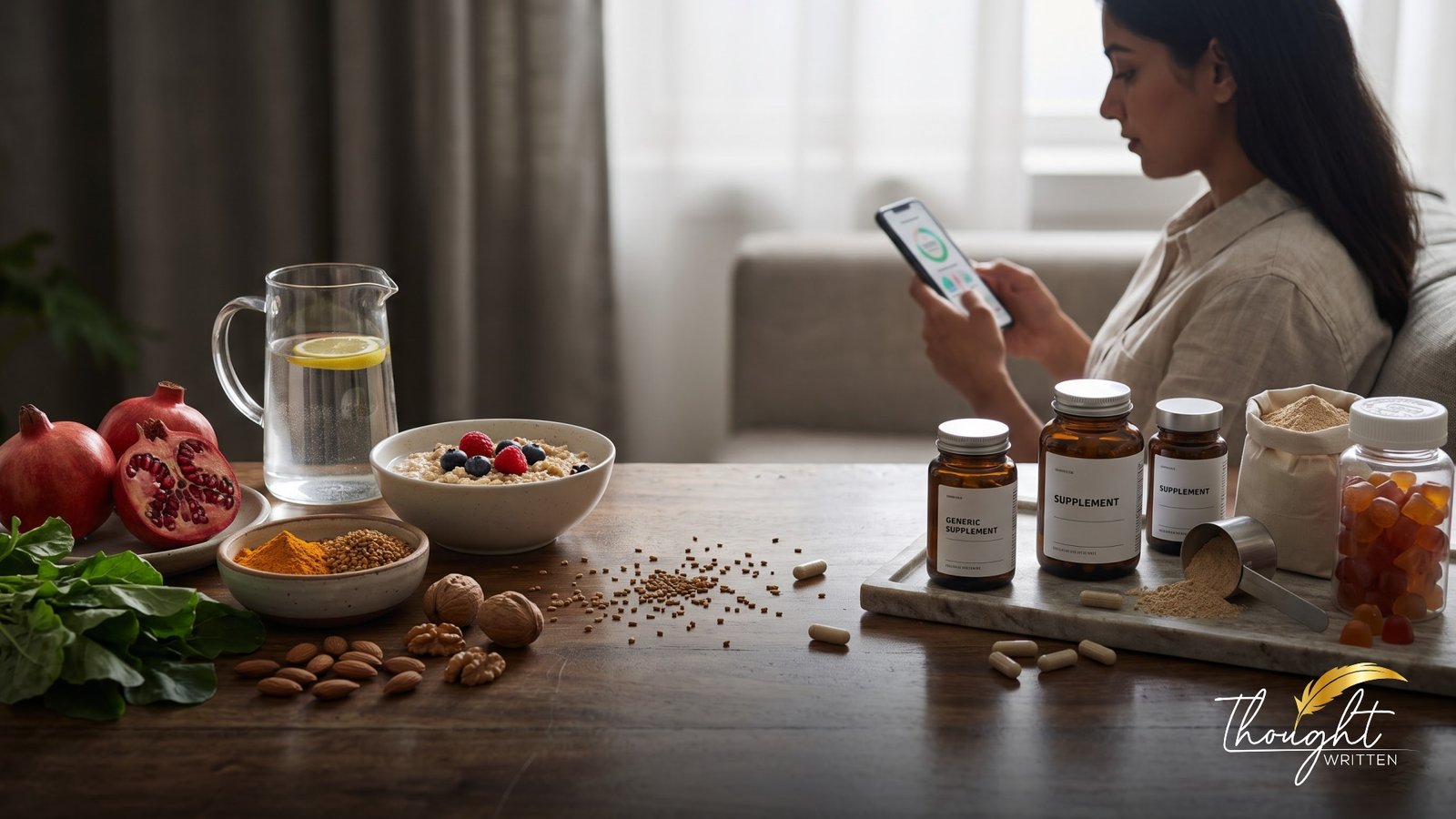
Supplements are a huge talk of the town. Everything ranging from protein powders, multivitamins, vitamin gummies to Omega-3 and probiotics are a part of everyday conversation. If you go a decade back and see, these supplements were only primarily associated with gym, athletics or health specific needs. Today, however, they are at all places including Instagram, Youtube, Pharmacies, and E-commerce.
This leads us to a major question: Are Indians truly becoming more health-conscious, or have brands just simply become better at convincing us that we need these products?
Why are Supplements suddenly everywhere in India?
Firstly, there is a greater health awareness amongst all the people. People are talking about nutrition, immunity, fitness, protein, gut health, sleep, energy, healthy ageing and whatnot. Secondly, even after the post pandemic, the health consciousness has increased. The pandemic has pushed people into health and immunity as the mainstream conversation. So it has evolved from how do I avoid getting sick to how I can optimise my health. Third, the fitness and gym culture has expanded beyond bodybuilding and muscle making. Protein and sport nutrition are now marketed to beginners, women, working professional and even recreational athletes. And lastly, social media has impacted this tremendously. Health information is increasingly consumed through Instagram, YouTube, podcasts, influencers, fitness creators and nutritional content makers. Thus, health supplements are becoming a popular talk in India?
A Lifestyle Product
Supplements are being positioned as a lifestyle product rather than just something that people take only when they are advised by the healthcare professionals. Fitness is all about protein, creatine and electronics, whereas when one wants beauty, they need collagen, biotin and beauty focused formulation. If one wants to focus on everyday wellness, they need multivitamins, omega-3 and other nutritional products whereas probiotics and health related fibres work well for people concerned about gut health. In order to have healthy ageing, products marketed around energy and mobility and general well-being work well. However the thinking question is, when the supplement becomes a part of somebody’s lifestyle identity, then does the customer still evaluate whether they actually need it, or is it just taken for the sake of taking it?
Social Media & Lifestyle Aspirations
Fitness creators post ‘What I take every morning’ or when a Wellness Influencer shares ‘My Daily Wellness routine’ … think of what that makes you think. When a beauty creator promotes supplements for healthier looking hair and skin, it automatically becomes a product that is the best one.
Now these endorsements become associated with fitness, discipline, beauty, productivity and self-care and the product thus becomes an identity for the same. Social media allows brands to reach customers through people they already trust. But the relationship can be complicated when the content is sponsored, affiliated links are involved, claims aren’t understood clearly, or when personal experience is treated as universal evidence. Influencers saying this works for me isn’t the same as evidence that it works for everyone and thus turning supplement taking into a lifestyle aspirations shouldn’t be driven just by a social media post that you saw.
Rise of ‘Wellness consumer’
The modern wellness customers don’t necessarily think that I am sick and that I need treatment. Instead, they want to be healthier, fitter, more energetic and perform better. This creates a huge market for the supplement marketeers. Consumer motivations such as being invested in preventive healthcare, fitness goals, appearance, immunity, ageing and lifestyle optimization has actually brought a psychological shift in the consumer mindset. They have now shifted from treating a health related problem to optimising themselves as a way of life. This is an important reason why the supplement market in India has expanded beyond the traditional healthcare market since past few years.
Do We Actually Need These Supplements?
The market of supplements and a huge supplement shelf does not necessarily mean that every man would need more supplements. Consumers should wisely consider their diet, lifestyle. They should even be mindful of their individual nutritional needs, medical advice if needed, existing medications or any conditions, and whether there is any actual deficiency or need for these supplements.
The supplement should not automatically become a substitute for balanced nutrition, sleep, physical activity, hydration, or medical care. Neither should it replace your physical well-being wherein you stop working out regularly or playing some sport, just because you are taking supplements to remain fit. Using supplements is not just a trend, but it is something that should be taken only when they are necessary and in need. A healthy individual with no supplement deficiency should definitely not take a supplement if not recommended to them.
Awareness vs Marketing Opportunity
Wellness is a powerful marketing strategy as it taps into human emotions such as fear, hope, aspirations, self-improvement and identity. Some examples of these are simply seen when phrases such as: supporting the immune system, feeling more energetic, taking control of health, ageing better, and looking your best are used. Now all of these messages are quite persuasive and they even get us into the loop of getting attached to these messages.
However this is a marketing strategy. A consumer may not think ‘I have researched my nutritional requirement’ but they may think ‘Everyone I follow is taking this so maybe I should take it too’. That is the difference between being influenced by the marketing opportunity and being health aware. This difference is what differentiates amongst a health conscious consumption with a trend driven consumption of supplements.
‘One Product Fits All’ Notion
Personalised marketing targets the inner world of the consumers and creates a false sense of oneness. A supplement promoted by a 22 year old influencer, a working professional, a celebrity or a beauty influencer may not necessarily be appropriate for every consumer. The problem with marketing is that it often simplifies complex health questions into just three steps which is Problem – Product – Solution. However this is highly misleading and the real health related decisions are more sensitive and nuanced in nature.
Indians as Smart Supplement Shoppers
Indians may follow some simple strategies that can help them become smart supplement shoppers. Firstly, they need to ask why they’re buying this supplement. Is it only because it is a trend or is the reason genuine. Secondly they should always read the label. Looking for ingredients, quantities, serving sizes, directions to use and manufacturer information will give one a lot of clarity on what can be bought. Third, the users need to be sceptical of extraordinary claims regarding the product that states that the product would give dramatic and drastic results in a short period of time.
Additionally. Consumers need to be mindful of how the influencers are presenting the testimonials regarding some product and if they are buying the product solely based on that. Another particularly important point is differentiating that natural supplements are not always risk free. This is a very sensitive point that most consumers slip in because they overlook the side effects of natural supplements. Also, just because one is taking supplements doesn’t mean that they overlook their total diet and forget how important healthy eating is. Lastly, consumers should also check for the regulatory or quality standard information and should only buy a supplement if it is relevant as per the Indian regulatory framework.
What’s Next?
Supplements industry will slowly gradually move into personalisation wherein products will be increasingly marketed around specific lifestyle and needs. The boundaries between food, beverages and supplements would also blur more due to introduction of things such as protein snacks, multivitamin drinks and more. Beauty supplements too would become a broad part of beauty routines.
In this, transparency will play a big role as customers would have to ask questions such as:
- What are the actual ingredients?
- Is the product truly effective?
- Where can scientific proof be found?
- Who is endorsing this product?
Hence, the industry may depend less on creating demand but more on earning trust.
It is clear that right now India is becoming more health conscious, which is creating great commerce opportunities in the segment of supplements. We aren’t simply buying products but we’re buying the promise of better health, better performance, better appearance and a better version of ourselves. Hence, the challenge is to learn to tell the difference between evidence and enthusiasm, genuine need and clever positioning, and health education and health advertising. The future of India’s wellness economy isn’t going to support brands that sell the most supplements; but it will belong to the brands consumers trust their healths with.