
As you walk through a grocery shop today, you will come across turmeric lattes that talk about its healing claims, gut shots that state that your skin problem will be cured, and energy bars with even more mood-boosting ingredients than nutritious components of the bars. So is the food today just food anymore, or food …
Is Food Really Medicine? The Truth About Adaptogens, Probiotics and Functional Snacks
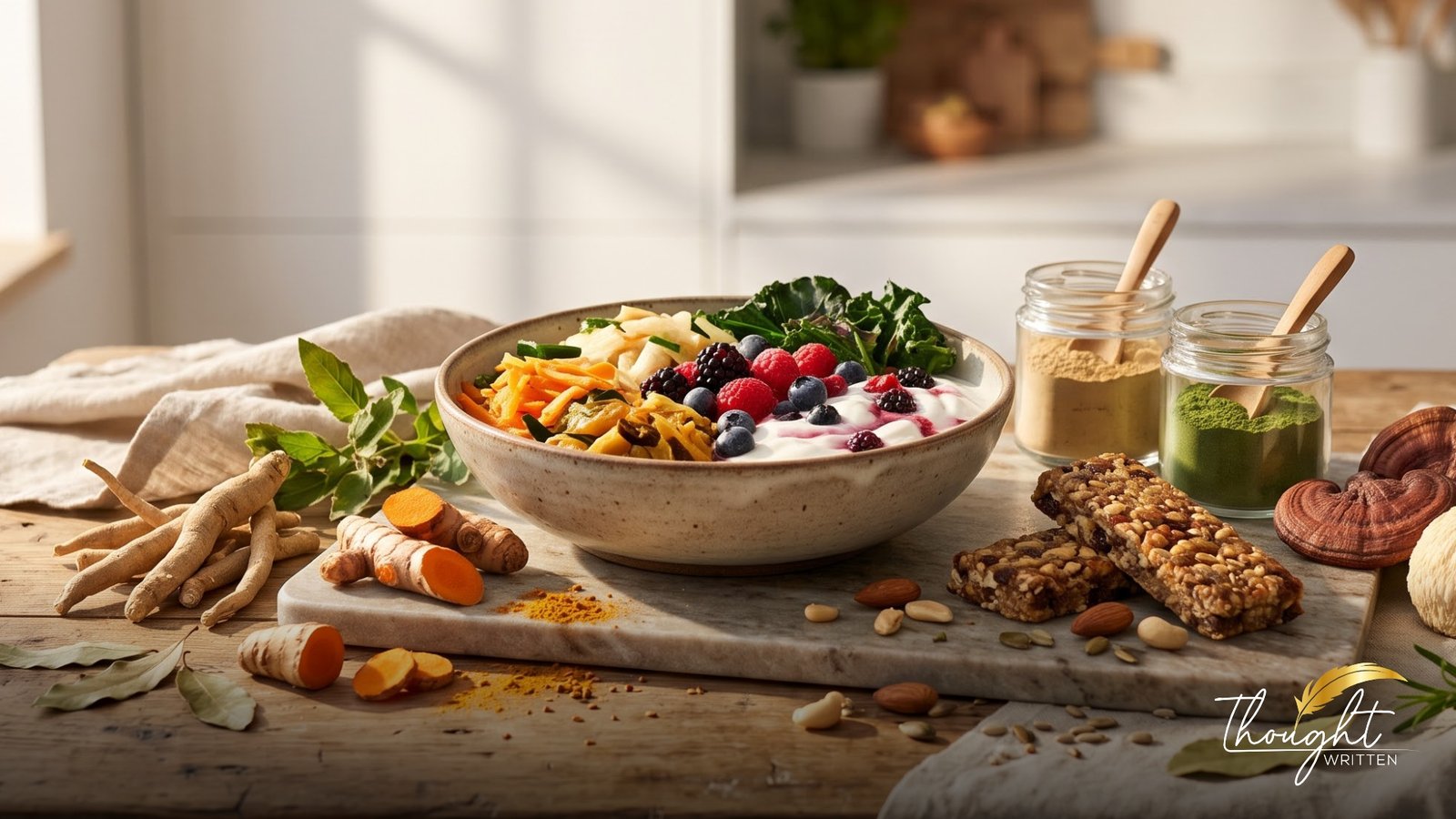
As you walk through a grocery shop today, you will come across turmeric lattes that talk about its healing claims, gut shots that state that your skin problem will be cured, and energy bars with even more mood-boosting ingredients than nutritious components of the bars.
So is the food today just food anymore, or food as medicine (or at least this is what the labels make us believe)?
However, before you decide to replace your meals with supplements, the really important question remains: do the “medicinal” foods really help, or are we just paying a lot of cash for expensive placebo effects? Let’s find out if – can food be used as medicine? And break it down to plain language.
What Does “Food as Medicine” Even Mean?
The concept of using food as medicine is not new, but cultures in far-flung nations utilized the properties of food for medicinal purposes long ago; only much later did wellness brands recognize the marketing potential of this idea.
For instance, Ayurveda, which is one of the oldest systems of medicine, viewed food and health as the same thing. Only the means of delivering this traditional knowledge have changed, but today it comes with a QR code. This fact, however, does not make the idea unscientific. It simply means we need to distinguish between facts and marketing tricks.
Adaptogens: Ancient Roots, Modern Hype
Adaptogens encompass a variety of herbs and roots, such as ashwagandha, rhodiola, and holy basil, that help the body “adapt” to stress. Some early studies point toward the potential of ashwagandha to reduce cortisol levels and alleviate the symptoms of anxiety. This is certainly encouraging. However, there is some bad news; virtually all research conducted on adaptogens is short-term and small-scale and has not always been replicated independently.
Although the stress-reducing effects may be true for some individuals, there is no guarantee that they will work for everyone. Therefore, even if you are already experiencing acute stress or overthinking, you should consider other factors that may have contributed to your stress levels.
Probiotics: Your Gut’s Best Friend?
Probiotics are living organisms that are present in foods such as yogurt, kefir, and kimchi, and also, to some extent, products like the new flavored beverages and gummies. The truth about gut health is that it really does affect our digestion, immune system, and even mood. There are also studies on the effect of gut health on skin.
The challenge, however, is in the right dosage and strain. Probiotic strains serve different purposes, and most products that are available only have tiny numbers of live cultures that are not even enough for them to survive stomach acid and make it to our gut in good condition. Drinking a cup of curd or eating fermented food like kanji often proves to be more effective than consuming a sugary beverage with some level of probiotics hidden among the ingredients.
Functional Snacks: Convenience Wearing a Health Halo
This is when the challenge turns most complicated for using food as medicine. Protein bars, “immunity” gummies, and chocolate with adaptogens have become ubiquitous, and they are not made of poor quality. It is important to note that “functional” is a term used in the marketing world, while its medical meaning is non-existent. Snack products with a dash of turmeric and a lot of sugar should not be seen as health products – they are merely regular snacks with a marketing hook on.
The most interesting change that needs to be understood is the way the packaged food industry is changing so swiftly to pursue this new trend, thereby combining convenience with “healthiness” claims.
So, can food be used as medicine?
Simply put, sometimes, foods used as medicine work, and usually as part of a bigger picture. Adaptogens and probiotics are not magic substances, but also not nonsense. The problem lies in the fact that wellness marketing tends to oversell an already modest effect into a miracle cure; you’ll see this pattern in many currently trending health solutions.
What actually works are boring things: sleep, stress reduction, and real food on your plate. If you ever wondered why sleep is so much talked about in health contexts, foods used as medicine work on the same systems, such as immunity, digestion, and stress hormones, which adaptogens and probiotics are supposed to affect.
It is also important to point out that some wellness trends tend to cause anxiety instead of actually relieving it. Chasing the next miracle food can actually become a source of stress, so it is advised to be grounded rather than reactive about everything.
How to Eat Smart Without Falling for the Hype
You don’t necessarily need to avoid functional foods—but you should definitely look beyond the label. Here are a few simple habits:
- Make sure to read the ingredient label, not just go with what is claimed on the front of the package. Just because the label says “adaptogenic” doesn’t mean the sugar contain any less sugar.
- Always go for old-fashioned, whole versions of foods rather than processed. Fermented foods, herbs, and real food are better than processed foods.
- Be sure of anything that claims to “detox,” “heal,” or “reverse” something overnight. When it comes to health, things rarely work that quickly.
In conclusion, while food is only one piece of the much larger puzzle, it definitely shapes how we feel.
Final Thought
Being curious, skeptical, and obsessed with food is perhaps the best way to channel your approach towards wellness trends, and that’s exactly our area of expertise. To read more impartial and enlightening information about food and health trends, don’t hesitate to visit Thoughtwritten, where we learn how to tell the real from the fake.
FAQs
Is there scientific backing for adaptogens?
Some have shown promising results in early studies, like ashwagandha for stress and cortisol. But the majority of the studies are small, showing they may be useful but are not a cure.
Are probiotic drinks effective?
Yes, as long as they have enough specific and viable bacterial strains to survive digestion. Conventional fermented foods tend to be better than probiotic shots with some sugar.
Is it justifiable to replace your meals with functional snacks?
Not really. Most are just regular snacks with a bit of functional ingredient added to gain market attention and should not be seen as a replacement.