
Introduction: The Secret of Oldest Skincare You Don’t Know. Back when serums were in glass droppers and the formula had not been devised to keep skin supple and smooth, the healers in India, China, and Siberia were turning to roots, berries, and fungi to assist the body in dealing with stress, illness, and the gradual …
Adaptogenic and Skin: Glow v. Ancient Herbs.
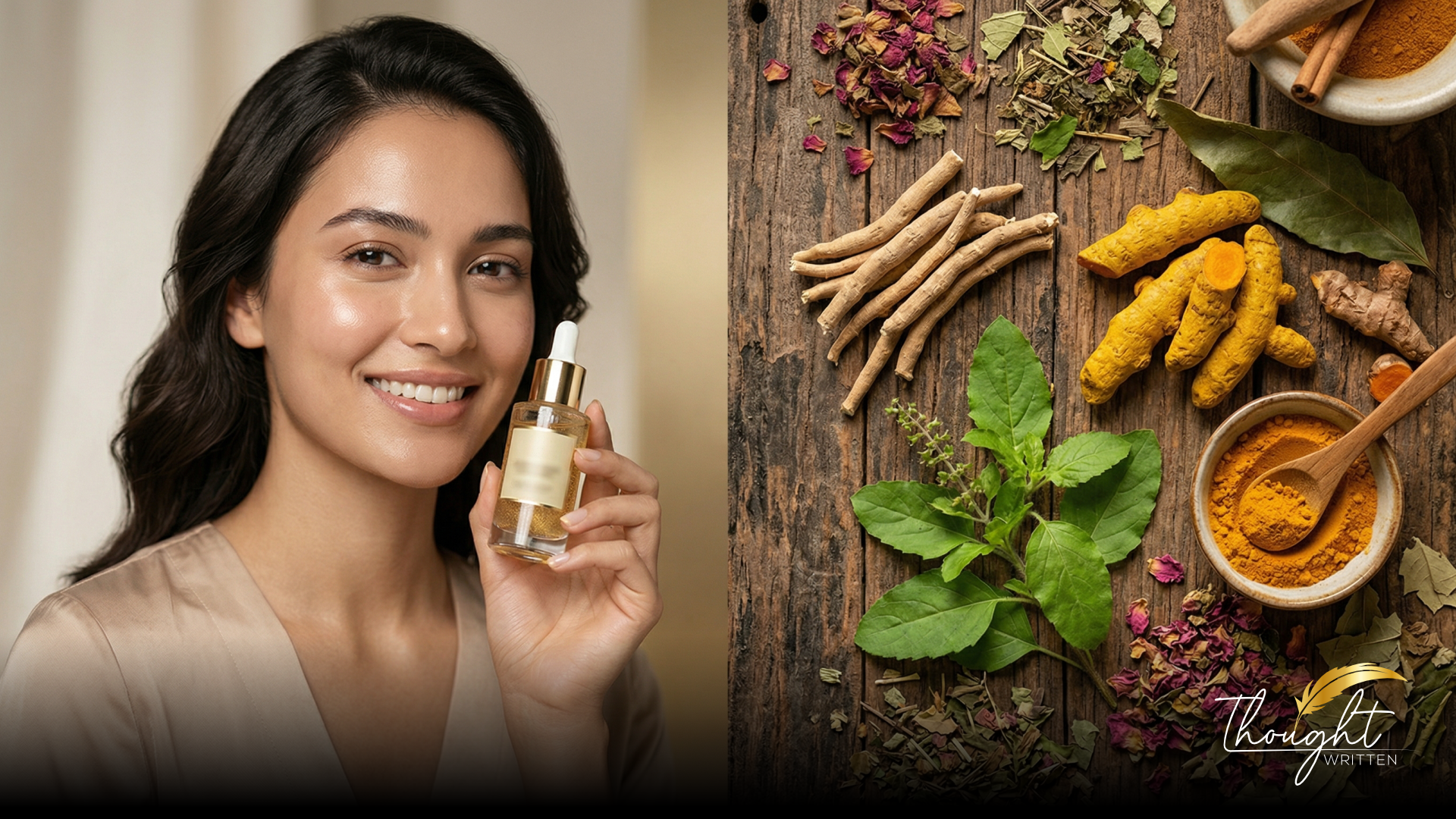
Introduction: The Secret of Oldest Skincare You Don’t Know.
Back when serums were in glass droppers and the formula had not been devised to keep skin supple and smooth, the healers in India, China, and Siberia were turning to roots, berries, and fungi to assist the body in dealing with stress, illness, and the gradual erosion of time. These plants were called adaptogens and for thousands of years were medicine.
They are having a time to-day. Ashwagandha is found in wellness lattes, reishi in face oils, and ginseng in eye creams. However it is not simply trend-chasing. Science is finally coming to appreciate what ancient medicine has always known: that chronic stress is one of the most harmful agents that take action on your skin, and adaptogens are perhaps one of the smartest weapons that we possess to counteract it.
This is not about magic. It is a matter of biology, history and a pretty rational relationship between the way your body responds to pressure and the way that the same pressure reacts on your face.
What Are Adaptogens, So What?
Soviet pharmacologist Nikolai Lazarev (1947) developed the adaptogen term in 1947 when he was seeking a substance that would enable soldiers and workers to act in extreme physical and mental stress. He found a group of plants that appeared to do something extraordinary; they assisted the body in adapting without overstimulating it or seeing it, but rather restoring it to its balance.
A plant has to fulfill three criteria to be considered a real adaptation. It should not be toxic in normal doses. It should generate an unselective reaction to stress – that is, it does not matter what kind of stressor it occurs. And it should assist in normalizing the physiological processes of the body, bringing systems that are either too high or too low to a more stable medium.
That is the most important point. The adaptogens do not drive the body in any direction. They modulate. And that modulation, it happens to have far reaching implications on the health of the skin.
The Stress-Skin Connection
The first step to understanding why adaptogens are important to your skin is to understand the effect of stress on it.
What happens when your body feels threatened, be it by a deadline, a challenging conversation or three days of bad sleep, the body initiates a series of hormonal reactions. The main stress hormone, cortisol, inundates your system. This is handy in the short run. The long-term effect of a high cortisol level is insidiously destructive to your skin.
Long-term excessive cortisol dissolves collagen, the protein that maintains the skin firm and elastic. It intensifies the production of sebum and worsens oily and acne-prone skin. It undermines the skin barrier making it less capable of retaining moisture and protecting against environmental aggressors. It also causes systemic inflammation that manifests itself on the skin in the form of redness, sensitivity, eruption of eczematous, psoriatic and rosaceous flare-ups.
In brief: your stress does not remain within. It migrates to the surface. And this is where adaptogens come in the picture.
The Key Players: Five Adaptogenic Skincare Game Changers.
Ashwagandha (Withania somnifera) is probably the most popular adaptogen in the Western wellness market. Ashwagandha is an Ayurvedic medicine that has been used over a long period of 3,000 years, and clinical studies have shown that it can significantly decrease cortisol levels. In the case of the skin, decreased cortisol levels would entail less collagen depletion, less inflammation, and a more relaxed and resilient complexion. Its antioxidant compounds are also used topically to neutralize free radicals, when used topically, one of the major causes of premature aging.
Traditional Chinese Medicine has branded Reishi Mushroom (Ganoderma lucidum) the mushroom of immortality, and despite the fact that immortality evades humanity, the effect of reishi on skin can be rightly called impressive. It has beta-glucans that have been known to profoundly moisturize the skin and enhance the barrier activity. It has anti-inflammatory and adaptogenic effects, which is why it is especially useful with delicate or reactive skin.
Rhodiola Rosea is a cold, hardy plant that commonly grows in Siberia and Scandinavia – regions that demand resilience and so maybe the reason why the plant evolved such strong stress-protective substances. Rhodiola assists in balancing the HPA axis (hormonal system that governs your stress response) decreasing mental fatigue as well as the subsequent impact on the skin. It has also exhibited antioxidant properties which safeguard the skin cells against oxidative stress.
A ubiquitous ingredient in Korean skincare, ginseng (Panax ginseng) was employed as medicine throughout East Asia thousands of years ago. Its active compounds, also known as ginsenosides, are widely researched due to their capability to increase collagen production, enhance skin elasticity and lighten the uneven skin tone. The circulation is also helped by ginseng and this implies that the oxygen and nutrients are delivered to the skin cells in a better way.
Tulsi or Holy Basil ( Ocimum tenuiflorum ) is also antibacterial, anti-inflammatory and full of antioxidants. It has demonstrated specific potential in acne-prone skin, where it can help to soothe the hormonal and stress-related breakages which more traditional skincare has often been unable to treat at the source.
The Question of How to Add Adaptogen to Your Lifestyle.
Adaptogens may act topically on the skin using serums, oils, creams, and internally as teas, tinctures, or capsules and powders. To keep the skin healthy, both methods are valid, and the most successful one is usually a combination of them.
On the inside, work with only one adaptogen at a time. Allow it four or six weeks before you can assess its outcome- adaptogens are not quick-fixes. They have a slow effect, re-tuning your body to stress as time goes on.
Topically, seek out products that have adaptogenic extracts in the first half of the ingredient list which means they are meaningful in terms of concentration. Combine them with a regular routine that is focused on barrier support: a mild cleaner, a quality moisturizer, and an SPF that they use daily.
And, perhaps most of all, learn to use adaptogens as a component of a more comprehensive discussion of stress. They are means, not remedies. Of all the strongest ingredients of skincare, sleep, movement, boundaries, and rest are still considered the most powerful.
Reflective Statement: Ancient Wisdom, Modern Skin.
The problem is not on the surface of the skin. It is a body talk and what you are expressing on your face is often a mirror of what is going on inside of it, in your gut, your hormones, your nervous system, and your level of stress.
Adaptogens understand this. They do not address the symptom as an isolated issue. They treat the state which produces it. With skincare being flooded with focused treatments and immediate gratification, something is quietly radical about a plant that merely assists your body to remember how to find its balance.
This was known by ancient healers. It is being verified by modern science. And your skin will pay you back, given time.