
There was a time when starting a company meant one thing above everything else which is finding the right co-founder. Someone technical if you were strategic.Someone strategic if you were technical.Someone steady if you were impulsive. The co-founder dynamic was about survival and balance. It was a leverage provided to help businesses grow. Today, something …
AI as a Co-Founder: The New Business Reality
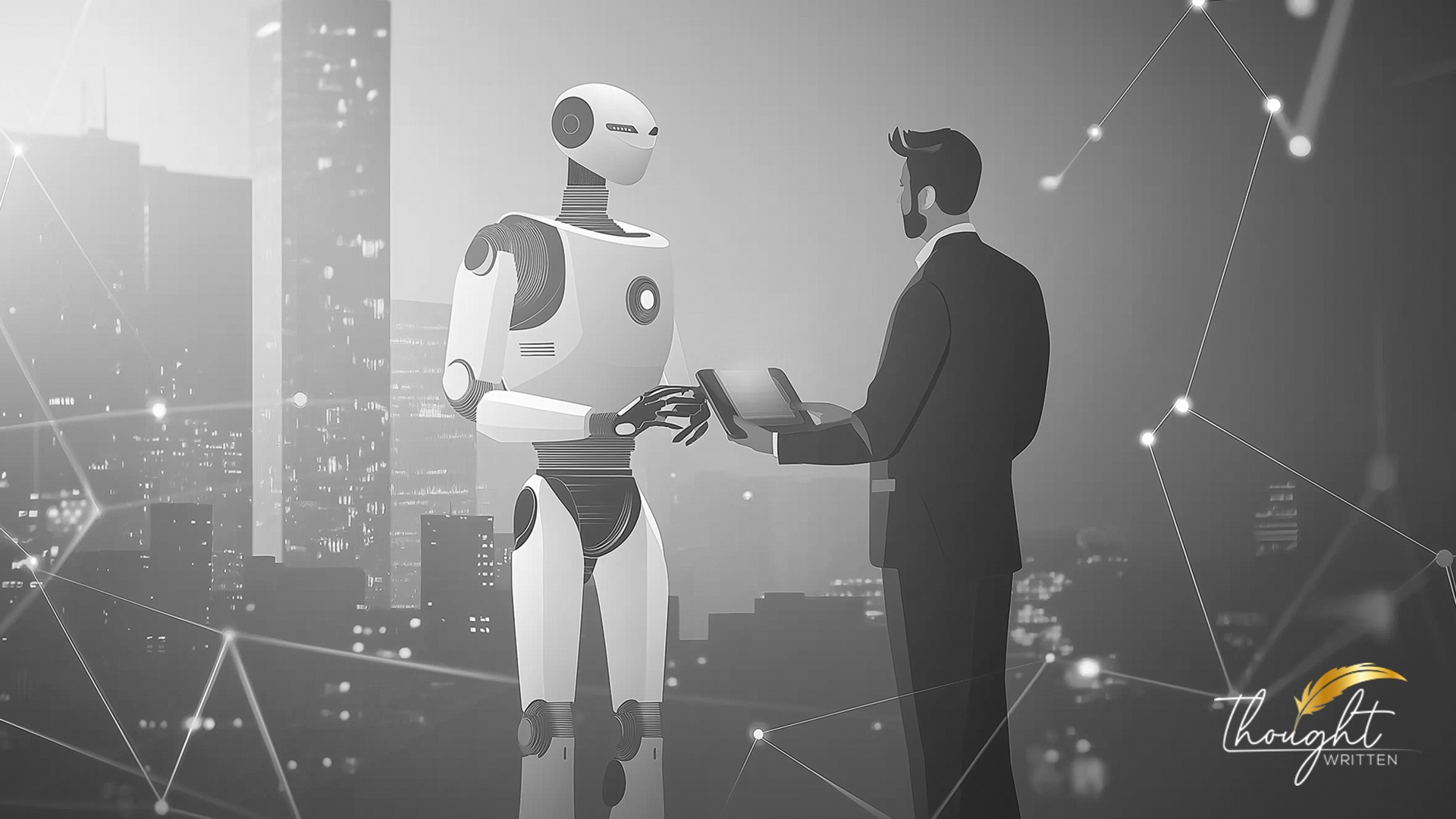
There was a time when starting a company meant one thing above everything else which is finding the right co-founder.
Someone technical if you were strategic.
Someone strategic if you were technical.
Someone steady if you were impulsive.
The co-founder dynamic was about survival and balance. It was a leverage provided to help businesses grow. Today, something far more disruptive is happening. Founders are building companies with a new kind of partner, one that doesn’t take equity, doesn’t argue over vision, doesn’t burn out, and doesn’t sleep.
Artificial Intelligence is quietly becoming the modern co-founder. Not legally or emotionally, but functionally.
The Silent Shift in How Companies Are Built
Look at how early-stage businesses operate today.
A solo founder can:
- Conduct market research in hours.
- Analyze competitors instantly.
- Build brand positioning frameworks.
- Draft investor decks.
- Generate financial projections.
- Prototype products.
- Automate customer support.
- Refine messaging across platforms.
What once required five people and several months can now be executed by one person with intelligent systems supporting them.
This isn’t hype but a structural change. AI compresses time and in business, time is power. Startups used to fail because they ran out of runway before product-market fit. Now, they often reach testing stages faster than ever before. Iteration cycles shrink, feedback loops tighten and data becomes accessible without hiring an analyst.
Speed is no longer an advantage. It is the baseline.
AI Amplifies Founders
There’s a misconception that AI will replace entrepreneurs. That automation reduces the need for human leadership. In reality, the opposite is happening. AI handles repetition whereas founders handle judgment. AI processes patterns and founders define meaning. AI generates options and founders make decisions. The most effective entrepreneurs today are not outsourcing thinking to AI, they are expanding their cognitive bandwidth because of it. Instead of spending six hours drafting the first version of a go-to-market plan, they spend one hour generating it and five hours refining strategy, identifying weaknesses, and strengthening positioning. AI doesn’t remove work, it reallocates attention toward higher-leverage thinking. And that is what makes it a co-founder.
The New Definition of Leverage
Historically, leverage came from three sources:
- Capital
- Talent
- Distribution
Now there’s a fourth: intelligent systems.
A founder with strong AI integration can compete with larger teams. They can simulate business scenarios before making decisions. They can test messaging before launching campaigns. They can forecast risk patterns before scaling operations. Imagine, when everyone has access to intelligent tools, then differentiation doesn’t come from efficiency only; it comes from vision, clarity, and depth of thinking. Now, this brings us to the real tension.
The Risk of Sameness
Here’s the uncomfortable truth. If every founder uses the same tools, in the same way, with similar prompts and frameworks, businesses start to look identical.
Brand voices converge, marketing language becomes predictable and strategy frameworks feel templated. AI can generate structure but it cannot generate lived experience. It cannot replace intuition built from failure or replicate taste and manufacture conviction. All that remains human. The founders who will thrive in this era are not the most dependent on AI but they are the most clear on how they wish to use it. They understand that AI is a support, not a substitute for thinking.
AI as a Strategic Partner
AI is becoming a thinking companion. Entrepreneurship is isolating, decisions are heavy and doubts are constant and in turn of these events, AI offers a low-risk environment to explore ideas.
You can:
- Stress-test your assumptions.
- Run scenario analysis.
- Explore alternative strategies.
- Challenge your positioning logic.
- Refine your communication.
It doesn’t replace advisors but it reduces friction before you approach them. In that sense, AI acts like a strategic sparring partner which is always available and always responsive. The founder still remains responsible for final decisions but the quality of those decisions improves when blind spots shrink.
Faster Growth Means Faster Consequences
Acceleration cuts a business in both the ways. If your strategy is strong, AI helps you scale faster and if your strategy is weak, AI helps you fail even faster. Poor positioning becomes visible very quickly and even flawed product assumptions get exposed earlier. This shallow differentiation is amplified across channels. So, AI magnifies outcomes, it doesn’t correct poor judgment which means clarity has never been more important. The businesses that will dominate the next decade won’t simply be “AI-powered.” They will be using AI as infrastructure, not identity.
The Founder’s New Responsibility
As AI becomes more functional in business systems, the founder’s role evolves as they spend less time on manual tasks and more time on:
- Vision
- Culture
- Ethical boundaries
- Long-term positioning
- Strategic partnerships
- Narrative control
So while AI can generate words, it cannot embody belief, and belief is what builds movements. As we’ve noticed, customers still respond to authenticity, teams still work better with clarity and investors still fall for conviction. Hence, AI may support your roadmap, but it cannot replace your why.
The Future: One Founder, Many Systems
We are moving toward a model where startups are increasingly lean. There would be one founder, a small team and an integrated AI system managing workflow, analytics, automation, and communication. This doesn’t make entrepreneurship easier but it exposes it more. With fewer layers between idea and execution, responsibility sits squarely on leadership and thus there is less room to blame systems and hide inefficiency.
The Real Question
AI as a co-founder is not a passing trend. It is becoming infrastructure, like cloud computing once did. It is invisible, but indispensable. The question is not whether AI will shape your business or not as it already is.
The question is:
Are you using it to shortcut effort?
Or to expand strategic depth?
The first one leads to surface-level growth and the other builds enduring advantage. In this new business reality, founders who combine human clarity with machine intelligence will define the next era of entrepreneurship, not because AI builds companies, but because the right founders know how to build with it.