Fuel prices have remained a major source of debate for the entire world and now with the war tensions in the Middle East, the oil prices have crossed $100 per barrel. The prices have surged up to 40-50% in weeks and the Indian rupee has hit the lowest of all time due to these oil …
Fuel Prices Rising Again? The Global Triggers Behind India’s Oil Concerns
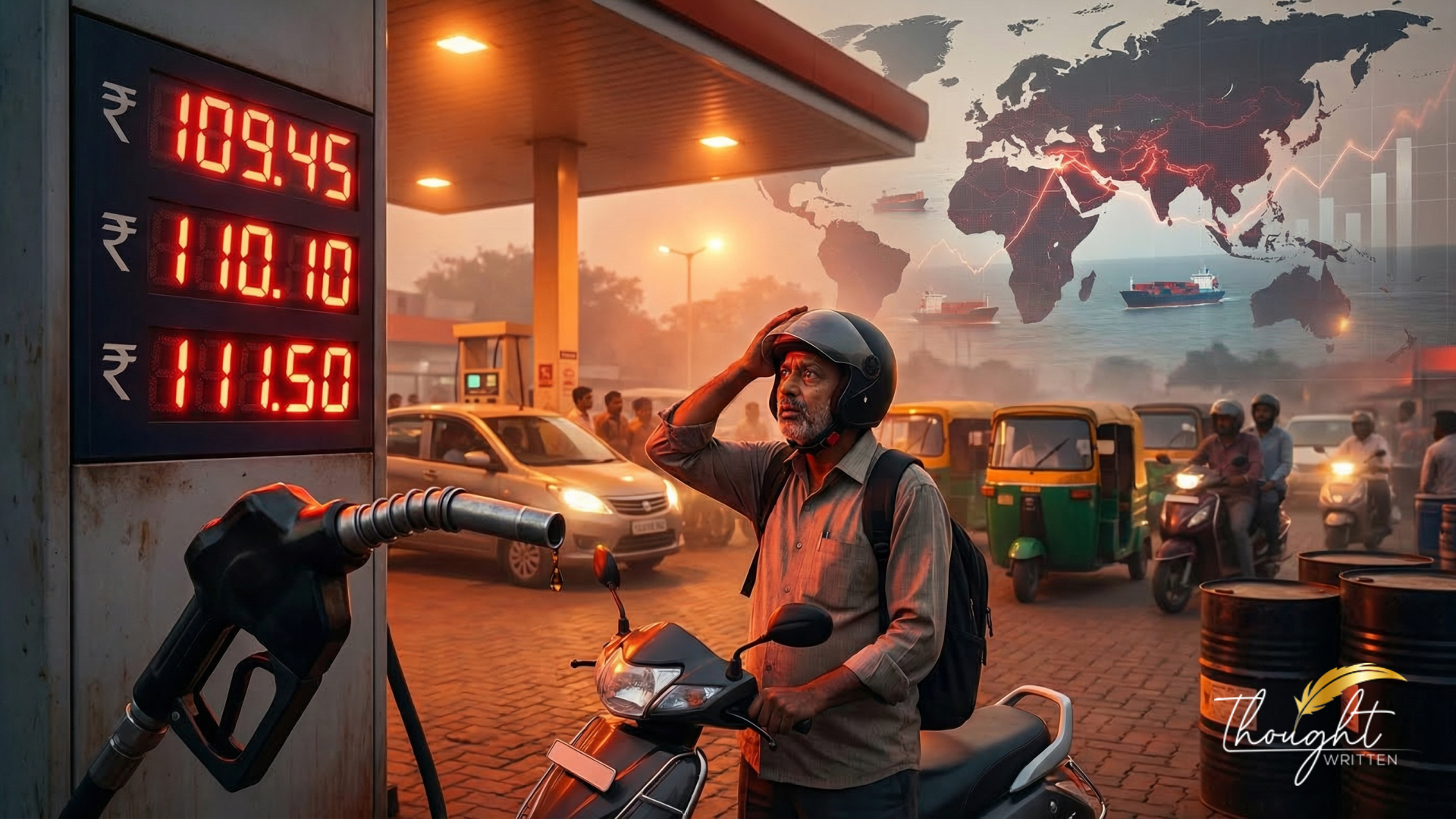
Fuel prices have remained a major source of debate for the entire world and now with the war tensions in the Middle East, the oil prices have crossed $100 per barrel. The prices have surged up to 40-50% in weeks and the Indian rupee has hit the lowest of all time due to these oil pressures. In reality, fuel prices don’t rise randomly, they react to global shocks and right now that is on the prime.
The Biggest Trigger
The war between Iran and Israel has led to a lot of disruptions especially in the supply. The oil barrels which used to come through the Strait of Hormuz, have now been blocked due to these wars. Even the energy sites of the Middle East have been severely damaged, this could also keep prices higher for long. Actually, the thing is that even the fear of disruption causes prices to increase. And that’s why oil markets react to future risk, not just present supply.
Strait of Hormuz: The real pressure point
20% of the global oil supply passes through the Strait of Hormuz. It also serves as a major oil route for India through which it gets its majority of oil supply. Now, owing to the Middle East war and the possible blockade in the Strait of Hormuz, there’s a supply shock which causes the price to rise. The question here is not just about ‘expensive oil’, it’s about whether oil reaches India at all or not.
Why India is vulnerable?
India imports 80-85% of its oil from the Middle East and is the third largest oil importer globally. With that being said, there’s only limited strategic reserves of oil with approx only 74 days total oil in buffer. Since, we are highly dependent on the oil supply, we’re highly affected by the shift in oil supply and hence even a small price change leads to a big economic impact.
The Chain reaction
A hike in oil prices affects the general public dramatically. Firstly, it leads to inflation as higher fuel prices result in higher transport cost which makes everything expensive. If things continue to be worse, the inflation may rise to 4-4.5% or even higher. Amidst these war scenarios, the rupee has fallen to approx 94 rupees per dollar. Naturally, oil imports increase the demand for dollars and hence the economy takes the hit. The economists have also analyzed that if the oil prices go to $130, the GDP may drop to 6% in total. Thus, the flight, food, FMCG and all the other sectors get expensive, affecting the everyday life of the general public.
Real Impact on Gujarat & Indian Industries
This isn’t just a national issue anymore, it has become an issue that’s a;ready hitting local industries. Gujarat industries itself is seeing a rise of 25% in diesel costs. The sectors which are affected the most are textiles, chemicals, and logistics. The supply chain disruptions have caused a lot of economic issues throughout the nation. This has also led the shipping insurance costs to rise tremendously. The damage to energy infrastructure in the Middle East has also significantly impacted the economy of the nation. The pre-war global inflation pressure has also led the prices to soar high. The oil prices, thus, rise not because of one event, but because multiple risks have stacked together.
Government response
The thing is, India doesn’t have a full control over the fuel prices, as oil is bought from global markets and its prices are decided by international demand and supply. So the government’s role is more about managing the impact rather than having control over it. One of the things that happen is price adjustment delays. For a while, the oil increase is not passed onto customers but the cost is absorbed or the margins are adjusted. But the pressure builds eventually.
There’s also tax factor. The huge portion of what we pay for petrol and diesel is actually taxes which goes to both the central taxes as well as the state taxes. In some cases, the government reduces excise duty but then it affects the government revenue. Well… India has a strategic petroleum reserve which is stored for emergencies, but it is only there up to a certain extent. They may act as a buffer, but not a solution.
Hence, India is trying to diversify its oil imports by purchasing from countries like Russia and the US. Thus, the response is kind of a balancing act.
What Happens Next?
In global situations, especially with the tensions in the Middle East, the oil prices might remain high or even go higher. Also the markets might react to what might happen over what is happening, and hence India has begun navigating its way into renewable energy and EVs that reduce oil dependency. There’s also a chance that if tensions rise, prices could stabilise again. And in reality, that’s what makes fuel prices a complex issue. It’s not just economics, it’s geopolitics, strategy and timing, everything mixed together.