The ongoing tension between Iran and Israel is approaching a stage of full-blown war. As it escalates, the global markets are closely watching one strategic location which is the Strait of Hormuz. The Strait of Hormuz is the narrow waterway between Iran and Oman that connects the Persian Gulf to the Gulf of Oman and …
Iran-Israel War: Why the Strait of Hormuz Crisis Matters for India
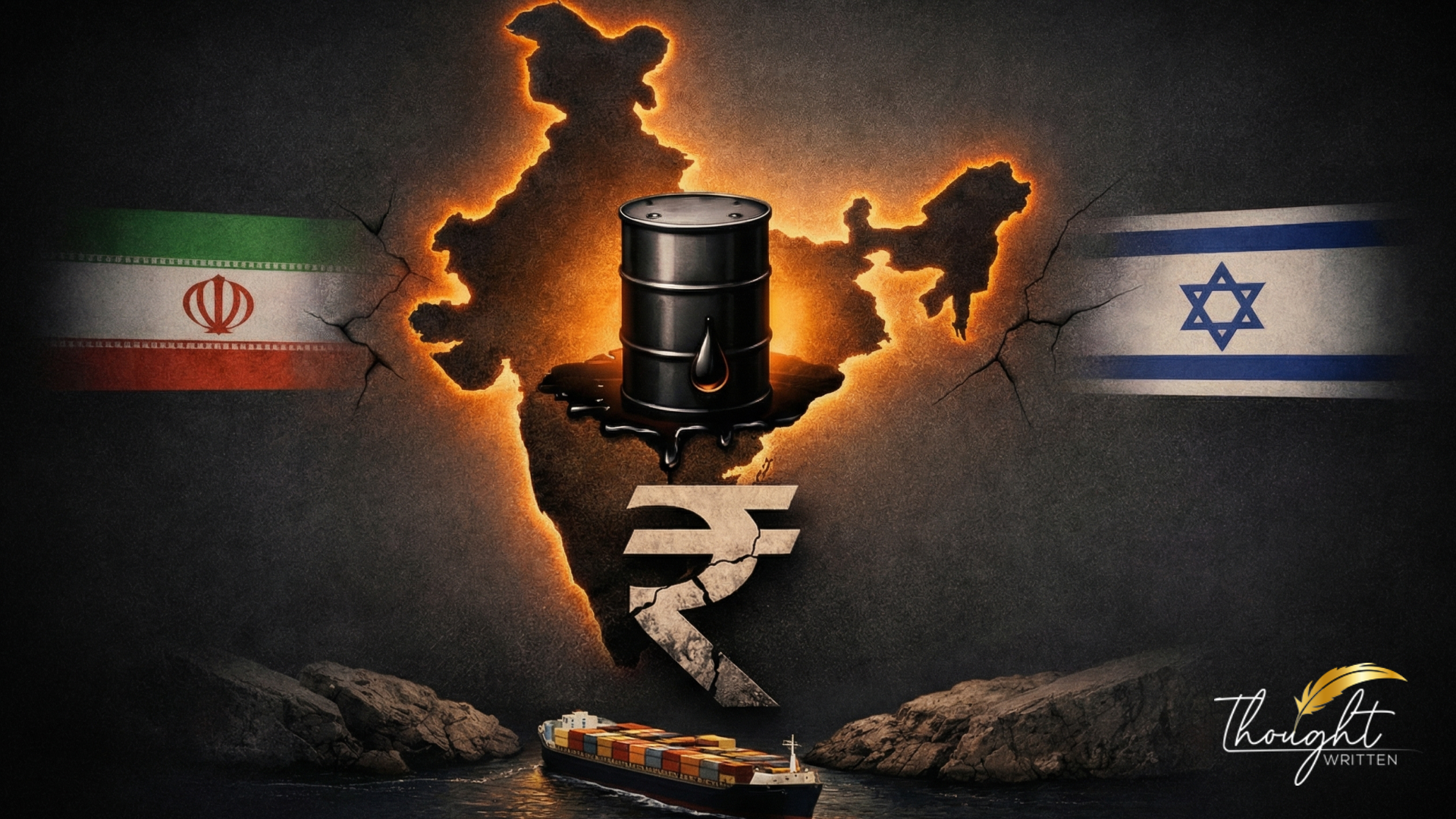
The ongoing tension between Iran and Israel is approaching a stage of full-blown war. As it escalates, the global markets are closely watching one strategic location which is the Strait of Hormuz. The Strait of Hormuz is the narrow waterway between Iran and Oman that connects the Persian Gulf to the Gulf of Oman and ultimately the Arabian Sea. It carries a significant share of the world’s oil supply.
Due to the tensions in Iran and the Strait of Hormuz being right near it, the economies across has been into shockwaves. To understand why this conflict matters for India, it is important to first understand the importance of the Strait of Hormuz.
For India which relies heavily on imported energy, the consequences of this could be immediate and serious. From fuel prices to food costs and availability of cooking gas, the ripple effect of this conflict could reach Indian households faster than expected.
Importance of the Strait of Hormuz
The Strait of Hormuz is the world’s most critical oil point which connects the Persian Gulf to global shipping routes. Approximately 1/5th of the global oil trade passes through this narrow passage each day. Major oil exporters such as Saudi Arabia, Iraq, Kuwait, and the UAE rely only on this route for shipping. Even the oil tankers and LPG shipments heading to Asia, Europe, and the other markets pass through this channel. And since Iran controls the northern coastline of the strait, it holds strategic influence over the shipping activity of the region. This is why war like situations and military escalation including Iran immediately raises concerns about the safety of this energy supply routes.
With the ongoing Iran-Israel tensions, there’s a consistent fear of a broader war with a possibility of naval clashes or tanker attacks which creates uncertainty in the global markets. Iran has previously warned that it could block or disrupt the Strait of Hormuz during military confrontations and they have even blocked it as on March 13,2026, causing a halt to most tanker traffic. While it is not formally closed, the threats from Iran’s Revolutionary Guard (IRGC) stating that the vessels entering the strait may be targeted has led the traffic to cease. Due to all these geopolitical tensions, insurance costs for oil tankers and cargo vessels have risen sharply. As a result, global oil prices have spiked and for countries that depend heavily on imported energy, these disruptions have translated into economic challenges.
Why India is vulnerable
India gets imports for more than 80% of its crude oil requirements through the Strait of Hormuz and a large portion of this comes from Middle Eastern countries. Now if there are any disruptions in tanker movement, it could delay shipments and increase costs which would directly affect India’s fuel economy and inflation levels. And yet rising oil prices are only one part of the story.
Apart from fuel prices that rise whenever global crude oil prices rise, even the LPG cylinder costs are reaching the sky. India imports LPG from Gulf countries and shipping disruptions can increase household gas prices to a higher level. Even the aviation fuel has become more expensive and thus air travel costs may also take a flight.
Not just that, this directly impacts the prices of vegetables, fruits and essential goods as transportation costs have increased due to higher fuel prices. As the shipping and logistics costs rise, electronics, machinery and consumer products may also become more expensive. Additionally, oil price shocks also affect the stockmarkets, and manufacturing sectors negatively. But beyond prices, the crisis could also affect trade routes and global supply chains.
Impact on Trade and Shipping
The Strait of Hormuz is not just an oil route but also a major international shipping corridor which is a passageway for cargo ships carrying goods between Asia, Europe, and the Middle East pass through this route. The rising conflicts are causing maritime insurance costs to rise and some ships are opting to take longer alternative routes thus increasing transportation time and costs. This ultimately damages supply chains and global trade flows. Another side of understanding this conflict’s influence is understanding that it involves the millions of Indians living and working in the Gulf region.
Impact on India
Quite a lot of our Indians live and work in UAE, Saudi Arabia. Kuwait and Qatar. They send a huge amount back to India every year in the form of remittance and the instabi;ity in these regions could affect employment, safety, and migration patterns of these people. Thus, any economic slowdown in the Gulf could also indirectly impact Indian households’ dependence on remittances.
How India is preparing for such risks
India has developed a strategic fuel reserve to handle any supply disruptions and has even diversified their fuel supply imports from Russia and other regions. Also, India has maintained diplomatic relations with Iran, Israel, and Gulf countries to balance its strategic interest.
The Iran-Israel conflict shows how regional tensions can affect the global markets and it is evident how the Strait of Hormuz remains one of the most sensitive energy points of the world. For India, such disruptions could influence fuel prices, trade flows, and economic stability and we must prepare for potential shocks in global energy supply to gain our footing.