If you really think about it, war doesn’t look like war anymore. At least not in the way most of us imagined growing up. There aren’t always visuals of tanks moving in lines or jets firing overhead. In reality, a lot of it now is happening in ways you can’t even see properly; and drones …
The Role of Drones in Modern Warfare: Lessons for India
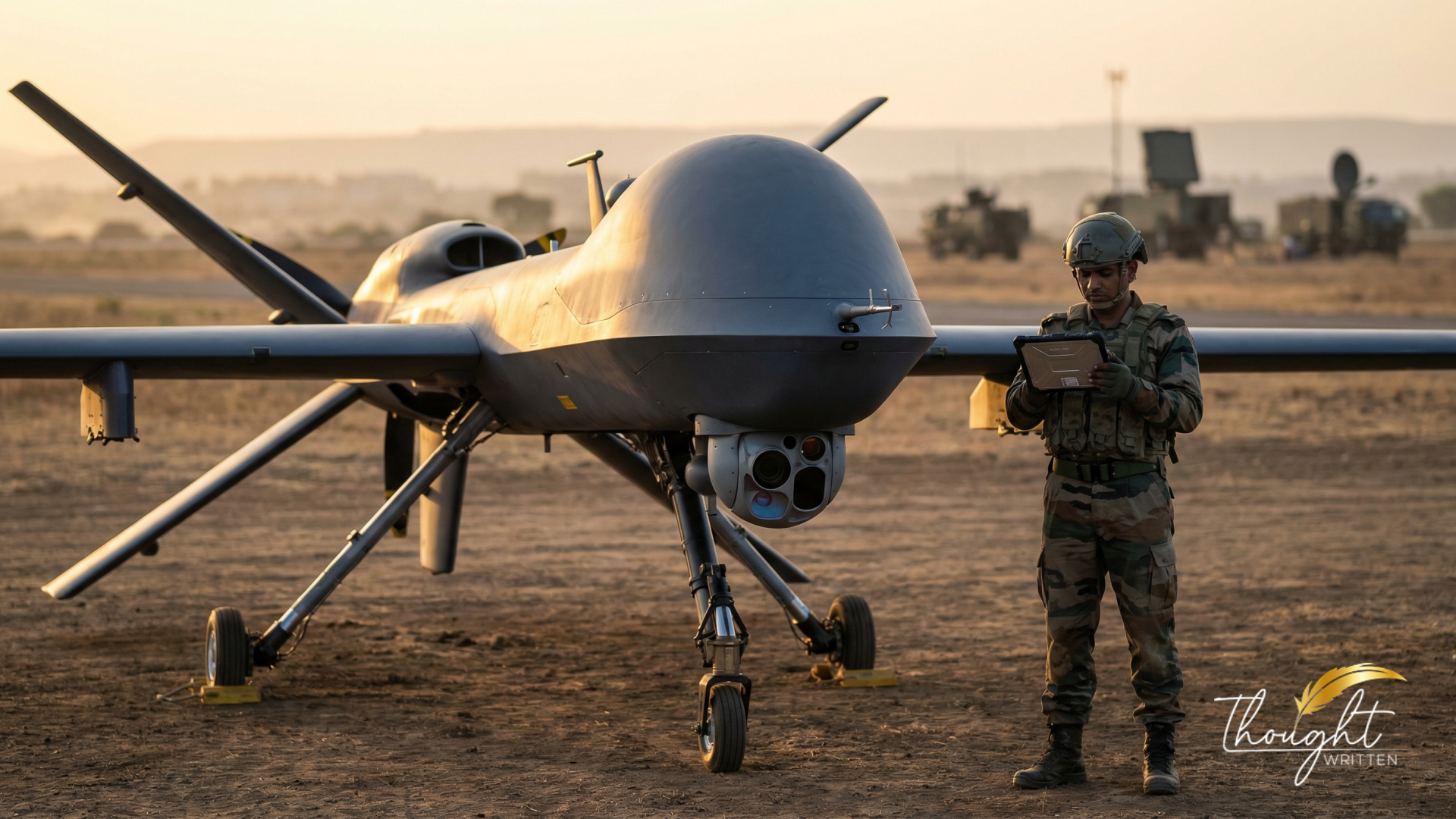
If you really think about it, war doesn’t look like war anymore. At least not in the way most of us imagined growing up. There aren’t always visuals of tanks moving in lines or jets firing overhead. In reality, a lot of it now is happening in ways you can’t even see properly; and drones are right at the centre of this shift.
A few years ago, drones were mostly seen as support tools which are just there to observe, maybe assist. But now? They’ve quietly moved into a much more active role. They’re watching; but also striking, tracking, and sometimes even deciding how operations go ahead. That’s a big jump, and it’s not something many people fully noticed when it was happening.
What’s interesting and a little concerning, is how accessible this technology has become. Earlier, if you wanted advanced military capability, you needed huge investments, serious infrastructure, and time. Now, even small drones, when used smartly, can bring a lot of destruction such as surveillance, mapping, and even targeted attacks. It’s not just big countries anymore as the balance has shifted and this makes things more unpredictable.
One area where drones have clearly changed the game is surveillance. They can stay in the air for long periods, just quietly observing and sending back information in the form of actual real-time data. And that matters because decisions are no longer based on “what might be happening,” but on what is happening. For a country like India which has borders that are not just long but also complicated with landscapes such as mountains, deserts, and coastal areas, such a kind of constant visibility makes a huge difference.
There’s the other side of it. Drones are also being used for attacks now, and they’re precise, targeted and almost clinical. On paper, that sounds like progress as it causes less damage, more control but in reality it also creates distance. The person who’s deciding isn’t physically there; but they’re looking at screens, data points, and a live feed. Such a kind of distance would definitely change the way in which decisions are made.
Another thing that’s important is the idea of drone swarms. They’re not just one drone, but many that are working together and this is where things get tricky. Traditional defence systems weren’t really built to handle dozens of small, fast-moving targets at once. It’s not just about spotting them; but it’s about reacting quickly enough and that gap, even if it is small, can be a problem.
So, where does India stand in all this?
To begin with, there’s a clear need to build stronger domestic capabilities as it is too much to depend on imports, especially in something as sensitive as defence technology. It is also risky in the long run. The good part is that India does have startups and companies stepping into this arena. It’s still growing, but the potential is definitely there. It needs consistency in support, in policy, and in long-term vision.
Also, it’s not just about having drones, countering them is just as important. We’ve already seen situations where drones are used near borders, sometimes for surveillance, sometimes for things like smuggling. So the focus has to be on detection systems, jamming technologies, maybe even more advanced solutions.
Integration is one aspect that gets overlooked. Drones can do a lot, but they need to be a part of the larger system. When drones are connected with satellites, intelligence networks, and ground forces their real strength comes out. Otherwise, they’re just isolated tools which are useful, but limited.
There’s also an ethical side to it which people don’t always talk about openly. When warfare becomes remote, it changes the emotional equation a little. Actions feel more controlled, more technical but the consequences on the ground are still ugly. Balancing that is not easy, and it’s something every country will have to think about carefully. If you look at the bigger picture, drones are not just another addition to military technology. They’ve actually changed how wars are approached. It’s less about scale now, and more about precision, timing, and information. That shift is subtle, but very real.
For India, the challenge is not just to keep up, but to stay aware of where things are heading. Because in modern warfare, it’s not always about who has more power. In reality, it’s often about who adapts faster… and understands the change before it becomes too late.