A pivotal moment for Indian Economy: India stands at a critical juncture qas Finance Minister Nirmala Sitaraman prepares to present the union budget 202627 on february 1,2026. This will be her record ninth consecutive budget presentation coming at a time whenthe nation faces both unprecedented opportunities and significant challenges. With India merchandise trends crossing USD …
Union Budget 2026: Comprehensive Analysis of Tarrif Reform and Investment Focus for India’s Economic Future.
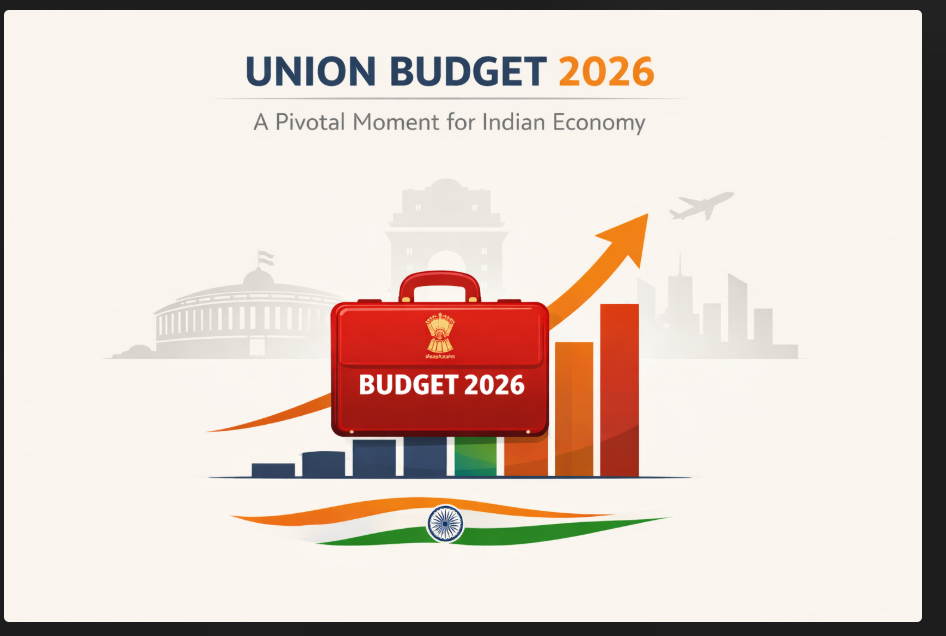
A pivotal moment for Indian Economy:
India stands at a critical juncture qas Finance Minister Nirmala Sitaraman prepares to present the union budget 202627 on february 1,2026. This will be her record ninth consecutive budget presentation coming at a time whenthe nation faces both unprecedented opportunities and significant challenges. With India merchandise trends crossing USD 1.16 trillion and nearly 29 percent og gross domestic product flowing through customs clearance, the upcoming budget is expected to address fundamental structural issues that have long impeded the country’s manufacturing ocmpetitveness and export potential.
The budget will be presented against the backdrop of robust economic indicators including steady GDP growth projected between 6.6 7.4 percent controlled inflation, and resilient external baalnce. However, beneath these impressive macroeconomic figures lies a troubling paradox: despite strong growth numbers, private investment remains notably muted, raising questions about the sustainability of India’s economic momentum.
The Tarrif Reform Imperative : Breaking Down Tarde Barriers
Current state of India”s Tarrif systems
India’s complex tarrif and customs system has lost relevance as a revenue investment while continuing to distort production decisions, with customs dutiesaccounting for just 6 percent of gross tax revenue and averaging only 3.9 percent of import value. This inefficiency comes at significant cost to the country, particularly as global companies reassess their sourcing strategies amid geopolitical fragmentation.
The Global Research Initiative ( GTRI), a prominent trade focused think tank, has released a comprehensive report titled ‘ A Blueprint For Modernizing India’s Import Tariffs and Customs Regime’ which outlines 23 critical reforms spanning tariff policy, customs procedures, export incentives, and manpower deployment. The distribution of tarrif revenue is highly skewed, with nearly 90 percent of import value concentrated in fewer then 10 percent of tariff lines, while the bottom 60 percent of tariff lines generate under 3 percent of customs revenue.
Key Recommendation from GTRI
The GTRI reports make several bold recommendations that could fundamentally reshape India’s tarde landscape.
Zero duty on industrial inputs. GTRI recommended moving toward zero duty on most industrial raw materials and key intermediates while adopting a standard duty around 5 percent on finished industrial goods over three years. This approach would eliminate the current inverted duty structure where inputs are taxed more heavily than finished products, a system that quietly erodes domestic manufacturing competitiveness.
Rationalization of Extreme Tariffs: Extreme tariffs, such as the 150 percent duty on alcohol, should be rationalized, as such rates encourage evasion while delivering negligible fiscal gain. The focus should shift from headline basic customs duty to total import duty, including cesses, surcharges, and trade remedies.
Simplification of Customs Notifications: Traders must navigate hundreds of overlapping notifications to determine applicable duties, often without clear HScode references. GTRI urges the government to issue selfcontained notifications and publish all applicable import duties in a unified online schedule.