If you take a glance at any of your Gen Z buddies’ phones right now, chances are you’d find three things: a halfway-through K drama, a food delivery app showing the nearest Korean restaurant, and a saved reel about how to prepare dalgona coffee or cheese corn dogs. This phenomenon is not just a fad; …
Why Gen Z Can’t Stop Bingeing Korean Food and K-Dramas
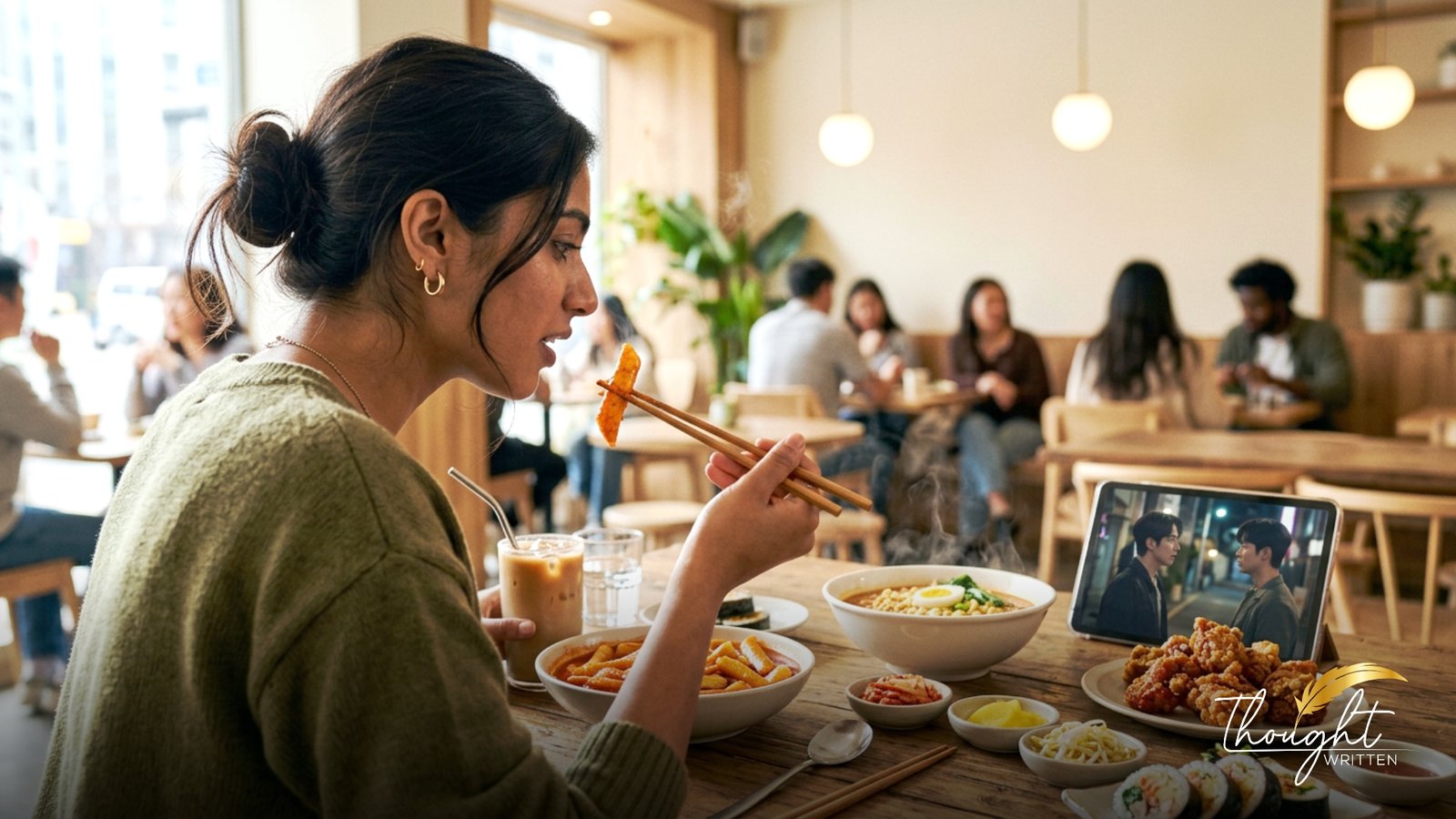
If you take a glance at any of your Gen Z buddies’ phones right now, chances are you’d find three things: a halfway-through K drama, a food delivery app showing the nearest Korean restaurant, and a saved reel about how to prepare dalgona coffee or cheese corn dogs. This phenomenon is not just a fad; it has turned into a full lifestyle and is being experienced everywhere from Rajkot to Rio de Janeiro.
So, what’s happening here? Why does an entire generation seem to have developed a sudden passion for Korean cuisine and the best k dramas shows concurrently? Here at Thoughtwritten, we like to look below the surface, so let’s find out the reasons behind this obsession.
It Started With Storytelling, Not Just Screens
In comparison to Western television shows, K-dramas have a different architecture. They are standardly one-season shows, and they generally represent a complete narrative with no prolongation whatsoever. The structure proves to be just what the millennial generation, raised on the dazzling variety of the content, needs. The story starts and ends with emotions being felt, and then people move on to a new story.
The best k dramas tend to be emotionally grand and truthful. People cry like real people should cry, apologize as they should apologize, and love as they should love. There is a slower development of relationships in them, giving a sense of being really old-fashioned but in a good way. The way of narrating emotions in Korean dramas represents the wider trend with regard to comfort and the emotional regulation process becoming of vital significance for youth in the modern world.
Food Became Part of the Plot
Let me share something that I find interesting. In K-dramas, Korean food doesn’t remain the backdrop. The characters sit at the table together for meals, prepare food for each other in moments of sadness, and socialize with each other over soju and grilled meat. In this way, food becomes a way of communicating love to the audience.
When a Gen Z viewer sees tteokbokki or a cheese-pulling corn dog on the screen, they perceive things differently. They are also seeing comfort, friendship, and play as a part of the world being shown on the screen with the new dish. It was a subject we already covered in You Are What You Eat, where food was depicted as an experience.
Social Media Made Discovery Effortless
Ten years ago, finding Korean media required some work. Nowadays, algorithms do a lot of the work. For instance, watching one K-pop video leads to watching something related to K-drama, which can lead to watching mukbang, which leads to the best Korean food recipes. This phenomenon is reflected in our study called The Psychology Behind Viral Products and Fast Consumer Purchases. Once it evokes ideas that are visually appealing, easy to share, and somehow lofty, it flies off the handle.
To this, you can add the fact that technology is constantly changing the way people explore media; this issue is addressed in our paper on How Technology Is Changing Customer Expectations Across Industries.
It Is About Identity, Not Just Taste
For many members of Gen Z, their passion for K-dramas and Korean cuisine is more than just a pastime, as it reflects their identity. Another thing that draws the modern youth to K-dramas/cuisine is that they feel it makes them a part of international culture and a trend-setter.
Young consumers want to be part of something larger than the local trend and search for authenticity in their consumption choices. This idea relates to experiences described in a separate assignment about how Gen Z participates in relevant causes, be it related to protest culture or pop culture.
Comfort Food Meets Comfort Watching
There may be an easier way to put it. Life gets tough, and Korean dramas as well as Korean cuisine provide comfort. With slow romances, soothing soups, cheesy snacks, and home-cooked meals, one can get an escape now and then. This phenomenon can, perhaps, be compared to a broader change in culture described in The New Status Symbol Is Not Luxury; It’s Homemade Meals, where comfort and warmth are becoming more popular than luxury products.
At the same time, there is a question related to this trend. While many young people are reaching out for Korean dishes, does this mean they are abandoning their own kitchens? This question, along with our article on the tradition of cooking, deserves attention.
A Trend Built on Real Emotion
While fads can come and go quite quickly, this particular one has been going strong for years, instead of waning over time. This is because it does not exist based only on concept and hype. In fact, it demonstrates true emotional connection, a connection that can also be found throughout food culture as explained in Plates of Indian Past and Plant-Based Food Innovation in 2026, where the best Korean food indicates how people think and what they need.
Final Thought
Gen Z’s affinity for Korean culinary delights and TV shows isn’t purely coincidental because it embodies comfort, storytelling, identity, and community in one highly consumable package. But there’s more to it than just that.
If you like topics like these right at the intersection of culture and Korean food and the psychology of youth, then you will resonate with what we have to offer at Thoughtwritten. Visit our Food and Lifestyle segments for more of the same content, or reach out to us directly if you have interesting trends in mind that you would want us to cover next.
Quick Answers
Why does Gen Z like K-dramas so much?
It is because k drama stories are well-balanced, emotionally transparent, and able to be consumed in one sitting.
Why is Korean food so popular with young people online?
Because it looks great on camera, feels comforting, and is closely tied to the shows and music they already love.
Is this just a passing trend?
No, it is a long-lasting phenomenon that has grown in popularity due to its sentimental nature.