
Walk into any city today and you'll notice the same pattern repeating itself: long queues outside a minimalist cafe with exposed brick walls and hanging plants, while the humble local eatery serving decades-old family recipes sits half-empty next door. This isn't a coincidence, it's a generational shift in how people choose to eat, socialize, and …
Why Gen Z Prefers Cafes Over Authentic Food
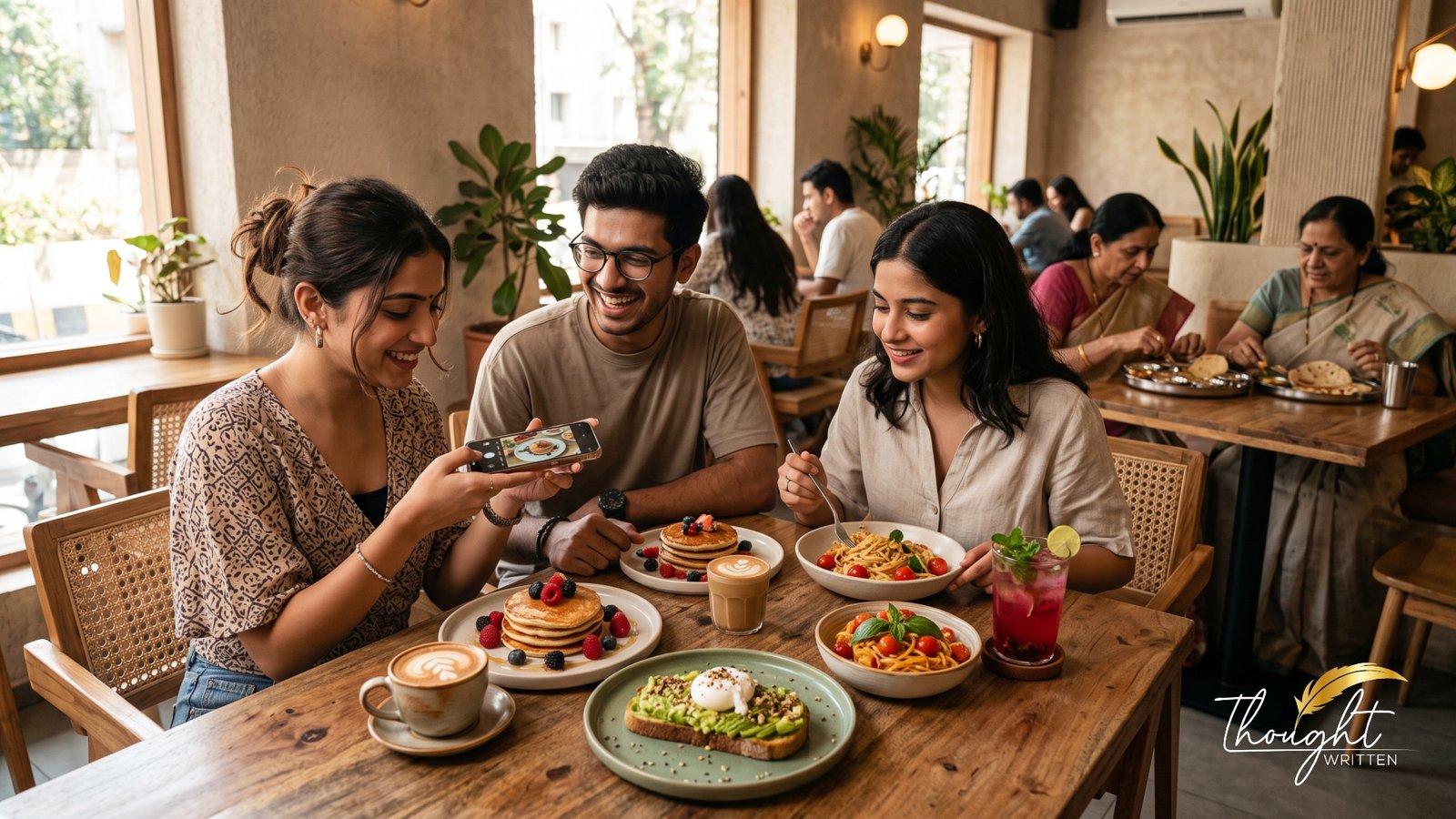
Walk into any city today and you’ll notice the same pattern repeating itself: long queues outside a minimalist cafe with exposed brick walls and hanging plants, while the humble local eatery serving decades-old family recipes sits half-empty next door. This isn’t a coincidence, it’s a generational shift in how people choose to eat, socialize, and present their lives to the world. Gen Z, the generation born roughly between 1997 and 2012, has developed a distinct relationship with food, and cafes have become their preferred stage. But why exactly does a generation raised on diverse cuisines and global food influences lean so heavily toward cafes over authentic, traditional food?
The answer isn’t as simple as “taste.” It’s a layered mix of psychology, technology, identity, and lifestyle that has fundamentally changed what eating out actually means.
1. Food Is Now a Visual Experience First
For Gen Z, a meal isn’t just something to be eaten it’s something to be seen. Growing up entirely within a social-media-saturated world, this generation has internalized the idea that experiences only fully “count” once they’re documented. Cafes understand this better than almost any other food business. Pastel-colored lattes, geometric plating, moody lighting, and curated interiors are designed specifically to be photographed.
Authentic food, by contrast, often prioritizes flavor and tradition over visual spectacle. A steaming plate of home-style curry or a rustic bowl of dal might taste incredible, but it rarely photographs as well as a rainbow bagel or a swirl of matcha foam art. In a culture where food doubles as content, presentation has become just as important as taste, sometimes more so.
2. Cafes Sell an Identity, Not Just a Meal
Where you eat has become an extension of who you are. Choosing a specific cafe signals taste, values, and even personality whether that’s “minimalist and calm,” “eclectic and artsy,” or “eco-conscious and plant-based.” Authentic, traditional restaurants rarely offer this kind of curated self-expression. They serve the same menu their grandparents did, in the same unpretentious setting, without a branded aesthetic to align with.
Cafes, on the other hand, are built as lifestyle brands. From their Instagram bios to their playlist choices, everything is engineered to make customers feel like they’re part of a particular subculture. For a generation deeply invested in individuality and self-branding, this matters far more than it might have for previous generations.
3. The Rise of “Third Spaces”
Sociologists often talk about the concept of a “third place” a space outside of home (the first place) and work or school (the second place) where people can relax, socialize, and simply exist without pressure. Cafes have become Gen Z’s default third space. They offer Wi-Fi, comfortable seating, ambient noise, and the flexibility to stay for twenty minutes or four hours.
Traditional, authentic food establishments were rarely designed with this purpose in mind. Most are optimized for quick turnover eat, pay, leave. Cafes, however, are built around lingering: studying, working remotely, catching up with friends, or simply people-watching with a coffee in hand. For a generation that often blends work, socializing, and leisure into the same block of time, cafes fit far more naturally into daily life.
4. Convenience and Customization
Gen Z has grown up with an unprecedented level of customization in nearly every part of life from streaming algorithms to app interfaces. Cafes cater directly to this expectation. Oat milk instead of dairy, extra shots of espresso, sugar-free syrups, gluten-free pastries the modern cafe menu is essentially a build-your-own experience.
Authentic, traditional dishes are far less flexible. A dish that has been perfected over generations isn’t meant to be modified; changing the recipe often changes its entire identity. While this consistency is part of what makes traditional food so special, it can feel restrictive to a generation accustomed to having every product tailored to their exact preferences.
5. Health Consciousness and Perceived Wellness
Gen Z is often described as the most health-aware generation yet, even if their choices don’t always align with strict nutrition science. Cafes have capitalized on this by marketing themselves around wellness cold-pressed juices, protein lattes, adaptogenic drinks, and “clean” ingredient labels dominate cafe menus.
Authentic food, especially in many cultures, is often rich, indulgent, and prepared with generous amounts of oil, ghee, or butter ingredients that carry a certain stigma in wellness-driven marketing, even when consumed in moderation as part of a balanced diet. The perception (accurate or not) that cafe food is “lighter” or “healthier” pulls many young consumers toward it, especially when wellness itself has become a personal brand.
6. Price Perception and Micro-Indulgence
Interestingly, cafes aren’t necessarily cheaper than authentic restaurants. In fact, a specialty coffee can often cost more than a full traditional meal. But Gen Z tends to view cafe spending differently. A $6 latte feels like an affordable “micro-treat,” a small daily indulgence that fits into a tight budget without requiring the commitment of a full sit-down meal.
Authentic dining, especially in a group setting, often comes with a higher total bill and a longer time commitment. For a generation juggling gig work, high living costs, and economic uncertainty, the low-stakes, bite-sized cost of a cafe visit feels more manageable, even if it isn’t always more economical in the long run.
7. Social Media Algorithms Reward Cafe Culture
Platforms like Instagram and TikTok have algorithmically boosted cafe content because it performs well with bright colors, satisfying pours, and cozy interiors generate high engagement. This creates a feedback loop: cafes get discovered more easily online, more people visit them, more content gets created, and the cycle repeats.
Authentic food content exists too, but it often thrives in longer-form storytelling cultural context, family history, cooking techniques, content that doesn’t always translate into the quick, visually-driven format that dominates short-video platforms. This gives cafes a natural algorithmic advantage in shaping what feels “trendy” to a generation raised on scrolling feeds.
The Bigger Picture: Convenience Culture Meets Curated Identity
None of this means Gen Z doesn’t value authentic food. Many young people deeply appreciate traditional cuisine, family recipes, and cultural food heritage. But cafes offer something authentic food often can’t: a flexible, photogenic, identity-affirming space that fits seamlessly into a lifestyle built around social connection, digital presence, and personal branding.
As this generation continues to shape consumer trends, the food industry is already adapting; traditional restaurants are beginning to rethink their ambience, presentation, and social media strategy, while cafes continue evolving to stay ahead of shifting tastes. The preference for cafes over authentic food isn’t a rejection of tradition; it’s a reflection of how deeply digital culture, identity, and lifestyle have become intertwined with the simple act of eating out.